
A mind beyond its time, in an age of illusions
Human history is shaped more often than not by ambition, struggles for power and the comfortable illusions that crowds adopt. Ages change, yet the human wish to take refuge in copied lives, ready-made dogmas and mental idleness never does. The one thing that outlasts geographies and eras is not power, nor the passing noise of crowds, but the spotless trace left by reason and by the undiluted search for truth.
In Alexandria, the greatest centre of learning and spirit in the ancient world, one name shone out among the formulas of geometry, the maps of astronomy and Neoplatonist philosophy: Hypatia. She was the emblem of a free mind that refused to surrender to the shallow comfort and the rote-learned truths of her age.
Father and daughter: the first steps of wisdom and the secret language of the universe
Hypatia was born the daughter of Theon, a respected mathematician and philosopher of the day. But Theon did not raise his daughter only on the stock education of the time; he taught her to think rather than imitate, to question rather than submit, and to listen to the deep rhythm of nature.
For Hypatia, mathematics was neither a body of rules to be memorised nor a practical craft; it was a way of reading the hidden language of the universe, that vast and flawless order. Already in those years she had grasped that building one's own mind is the strongest refuge against all the confusion of the outside world.
Neoplatonism and the School of Alexandria: a free lectern against copied lives
When Hypatia took charge of the School of Alexandria, she did not merely teach mathematics and astronomy. By reinterpreting Platonic and Aristotelian philosophy, she instilled in her students the sense that truth is too boundless to be squeezed into a single mould, a political ambition or a dogma.
At a time when her contemporaries were swept along by mass illusions and stereotyped ways of living, her lectern was a centre of intellectual awakening. Minds of different faiths and origins gathered round her from every corner of the world. For in Hypatia's classroom it was not belonging, titles or the roles society imposed that spoke, but only free reason and the grace of abstract thought.
Pushing the limits of thought: when the abstract becomes concrete
Not content with theoretical philosophy alone, Hypatia was one of those rare minds able to carry abstraction into the practical world. By improving the intricate astronomical instruments of the day (the astrolabe) she brought the map of the sky closer to the human mind; she designed the hydrometer, which measures the density of liquids; and she wrote landmark commentaries on Apollonius's Conics.
She believed that knowledge was neither a display of power nor an elite privilege, but a light that frees the soul and rescues us from the torpor that the love of comfort breeds.
The permanence of light, and an honest fortress
Cities fall, libraries burn, and as comfort chases comfort, humanity can lose itself among the copied lives it has made. Yet the timeless echo Hypatia left in the streets of Alexandria is still fully alive. The most fundamental truth she left us is this:
To think, to refuse to surrender to the cheap illusions of one's age and to guard one's independence of mind is not a privilege; it is a debt we owe to ourselves and to the universe.
And the honest fortress that reason builds goes on standing against all the noise and all the shallowness of time.
About this piece
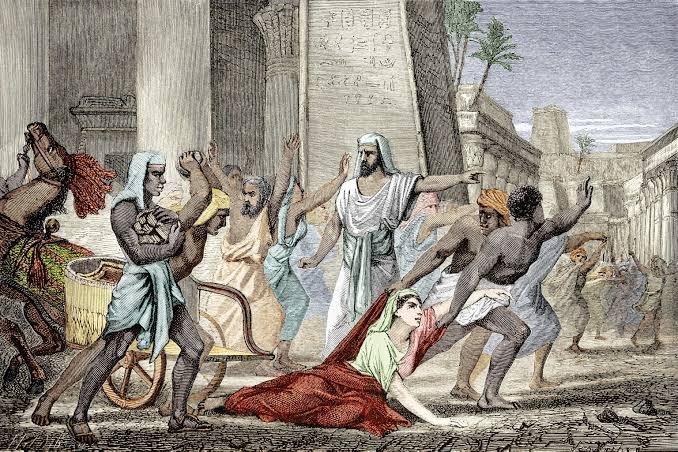
This piece is an essay written for Parilem by Tevhide Tacan. The cover image is a nineteenth-century engraving, coloured later, depicting Hypatia's murder in Alexandria in 415.